Iran Logistics & Export Routes: How Food Products Reach International Markets
A Practical Guide for Importers of Iranian Food Products
For an international importer, finding a good product is only the beginning.
Before placing an order, buyers need to know how the goods will move from the manufacturer to their warehouse, which transportation method is suitable, how the shipment will be packaged, what documents are required, how transit time is managed, and what alternatives are available if market conditions change.
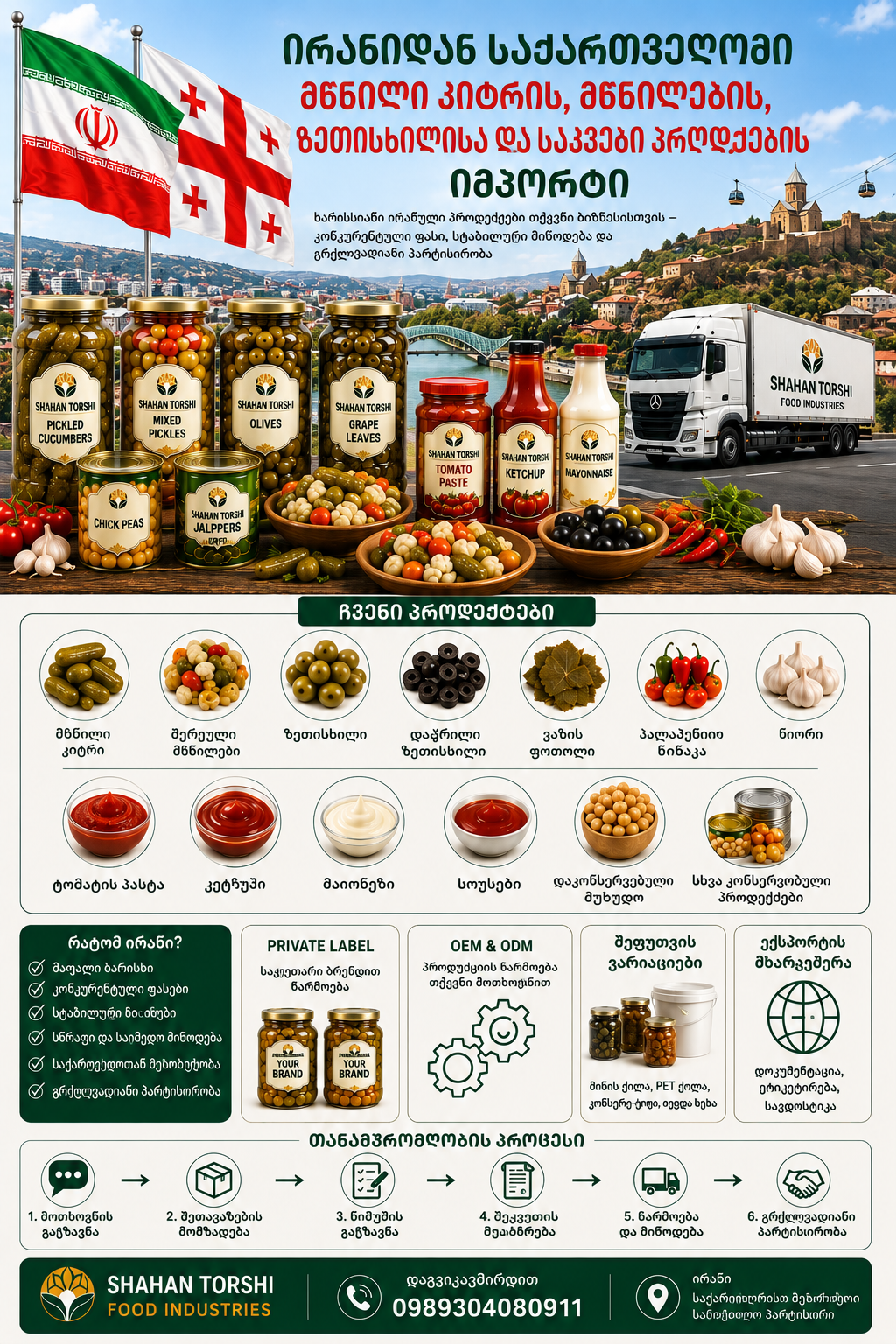
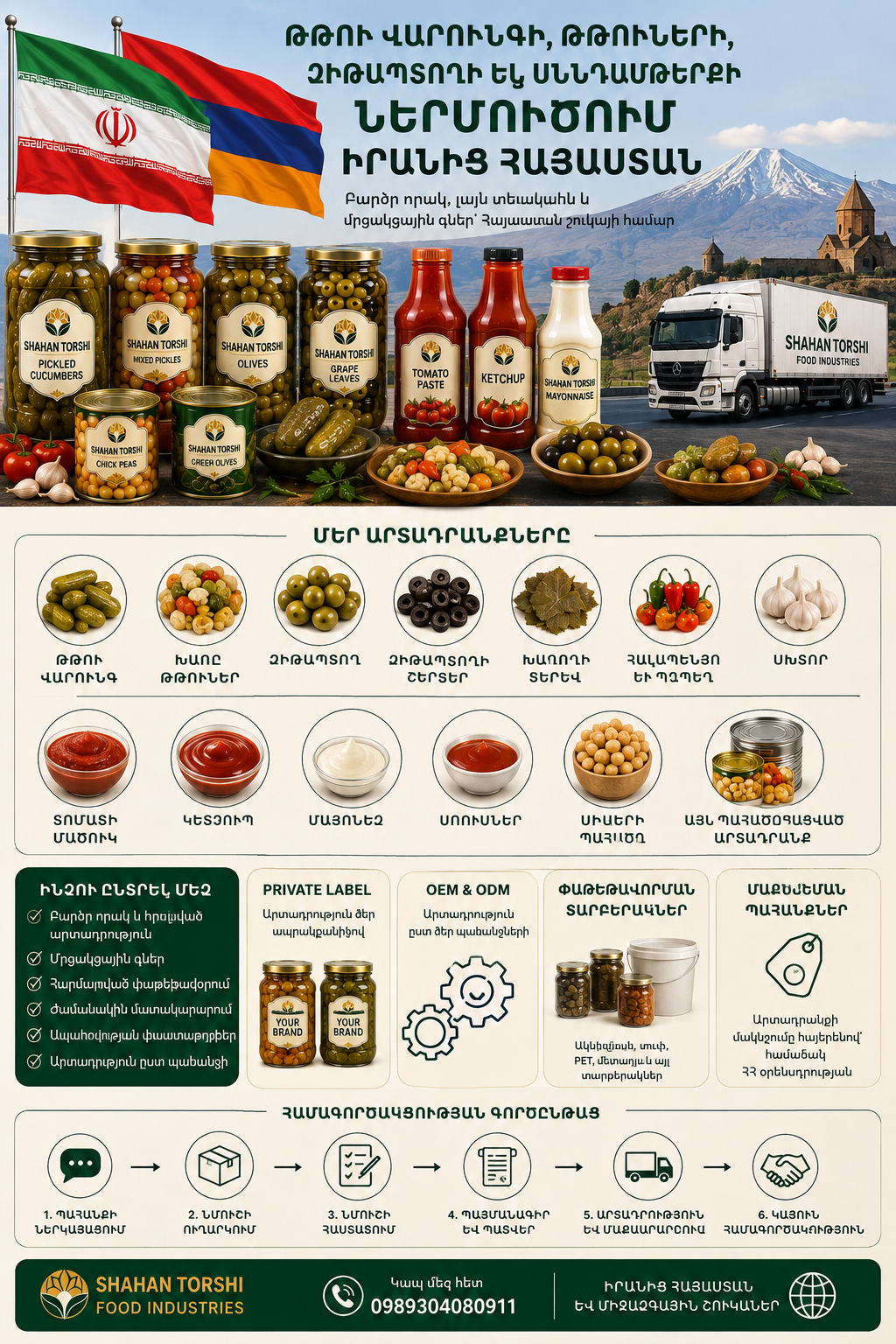
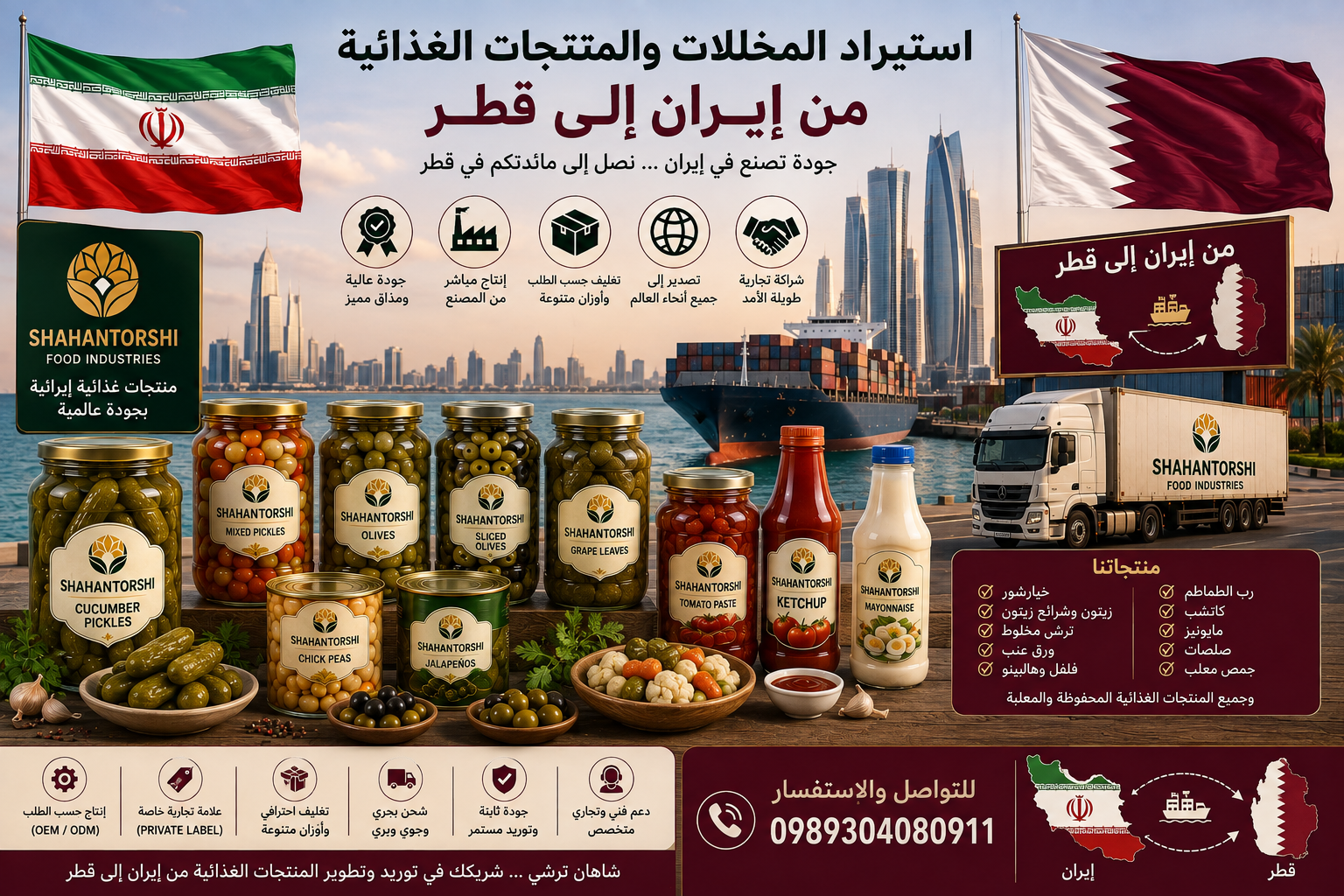
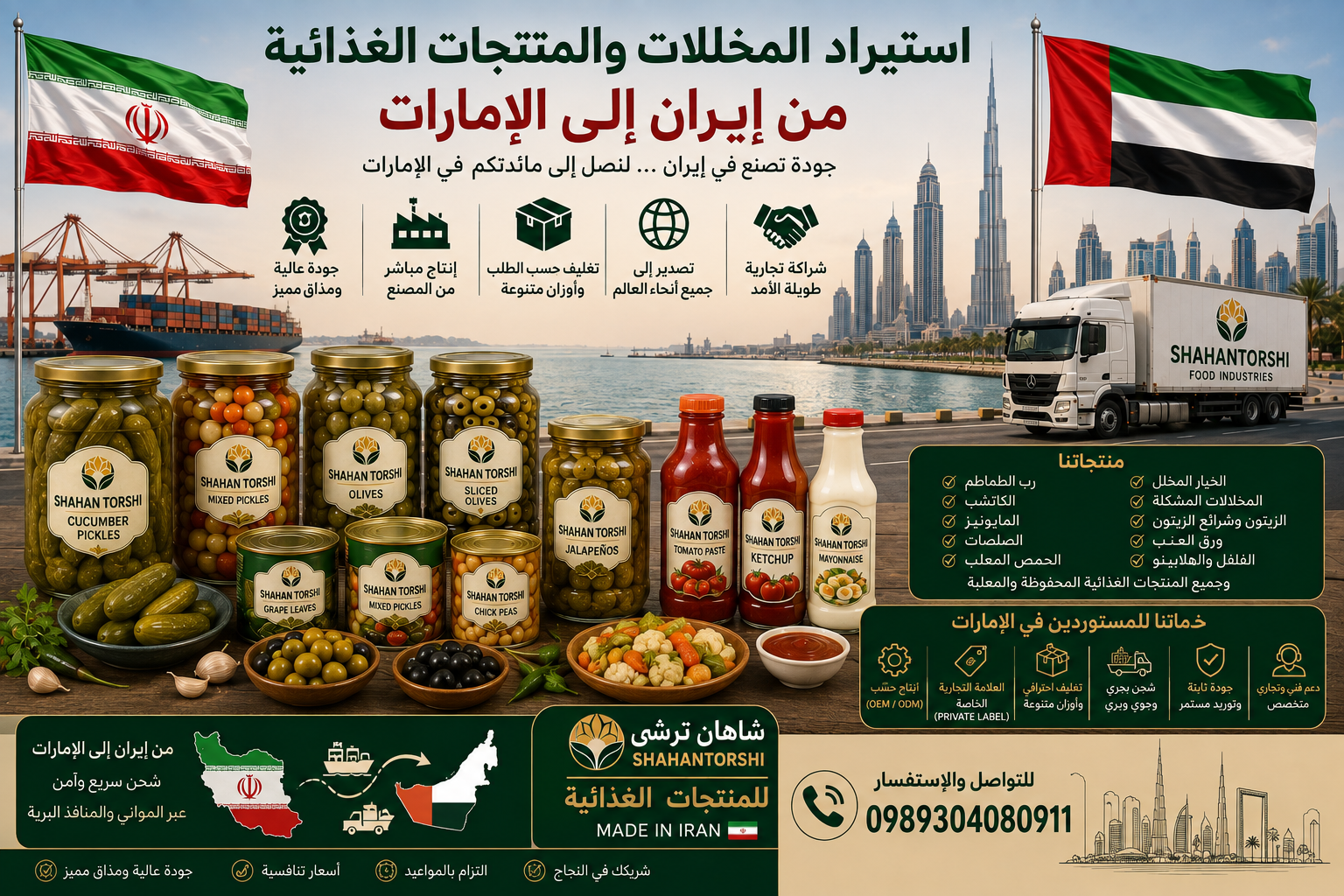
This is particularly important when importing food products such as Persian pickles, cucumber pickles, mixed pickles, olives, pickled garlic, jalapeños, and other preserved vegetables from Iran.
Iran’s geographical position gives exporters access to several transportation corridors. Depending on the destination, cargo requirements, available services, commercial conditions, and current regulations, Iranian food products can be transported by sea, road, rail, or air.
The key advantage is not that every route is always available under every condition. The advantage is the ability to evaluate different routes and select the most practical solution for each shipment.

Why Logistics Matters When Importing Pickles from Iran
Pickles and preserved vegetables are different from many fresh food products because they generally have longer shelf lives when properly manufactured, processed, packaged, and stored.
This creates greater flexibility in international transportation.
A shipment of cucumber pickles, for example, may be transported as palletized cargo or containerized cargo depending on the packaging format, destination, order volume, and buyer’s requirements.
For importers, this can make Persian pickles suitable for:
- Full container load (FCL) shipments
- Less-than-container load (LCL), where commercially practical
- Wholesale distribution
- Food service supply
- Retail distribution
- Private Label programs
- Bulk and industrial food supply
The correct logistics model should always be selected according to the product, packaging, destination, quantity, delivery requirements, and current transportation conditions.
Iran’s Strategic Position Between Major Markets
Iran sits at the intersection of several important commercial regions.
Its geographical position provides connections toward the Persian Gulf, Central Asia, the Caucasus, Turkey, the Middle East, and wider international markets.
For food exporters, this creates opportunities to use different combinations of sea, road, rail, and air transportation.
A shipment does not necessarily have to follow one fixed route.
Depending on the destination, an exporter may evaluate:
Iran → Sea Port → International Sea Freight → Destination Port
or
Iran → Road Transport → Neighboring Country → Final Destination
or
Iran → Rail/Road Corridor → Regional Distribution Market
The appropriate option depends on the specific trade lane and the conditions available when the order is shipped.
Sea Freight from Iran
For large-volume food orders, sea freight is often an important logistics option.
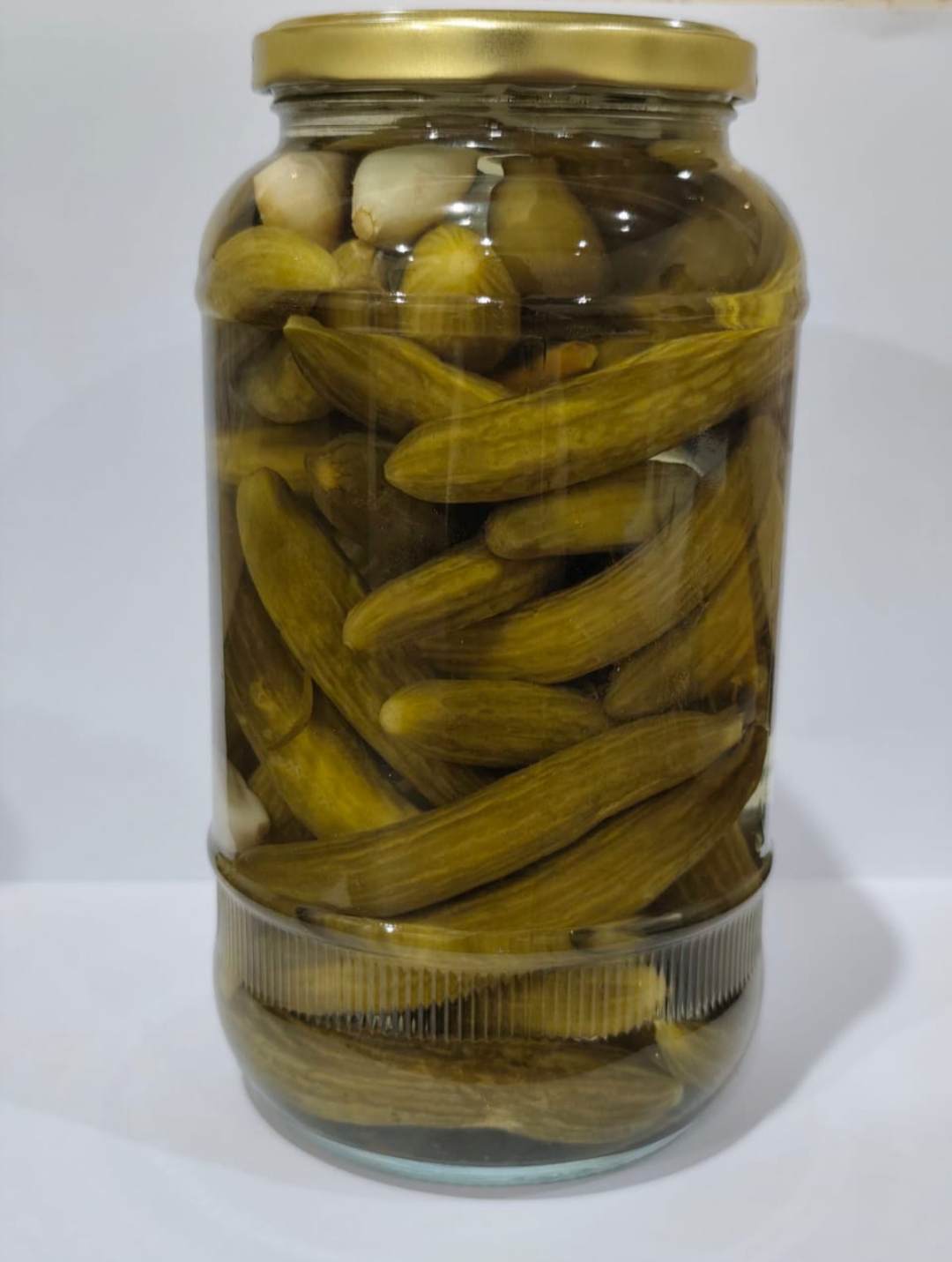
Products such as cucumber pickles, mixed pickles, olives, pickled vegetables, and other preserved foods can be prepared for containerized export according to the buyer’s packaging and handling requirements.
Sea freight can be particularly relevant for:
- Large wholesale orders
- Full-container shipments
- Long-distance destinations
- Retail distribution programs
- Private Label food orders
- Regular commercial supply
The final port, shipping line, transit time, freight rate, insurance arrangements, and documentation requirements should be confirmed for every shipment.
For international buyers, the important point is to plan the shipment before production is completed rather than treating transportation as the final step.
Road Transportation for Regional Markets
Iran shares land borders with several countries, creating important opportunities for road-based trade.
For nearby markets, road transportation can offer a practical solution, particularly when the destination is accessible through established regional trade corridors.
This can be especially relevant for buyers in:
- Iraq
- Turkey
- Armenia
- Azerbaijan
- Georgia
- Central Asian markets
- Other accessible regional destinations
For food products with appropriate shelf life and packaging, road transportation can provide flexibility for wholesale and distribution orders.
The best route depends on border conditions, customs procedures, carrier availability, destination requirements, and the agreed commercial terms.
Rail Transportation and Multimodal Logistics
Rail can become an important component of a broader logistics strategy, particularly for longer regional corridors and multimodal transportation.
Multimodal logistics means that a shipment may use more than one transportation method during its journey.
For example:
Factory → Truck → Rail Terminal → Rail → Distribution Center
or:
Factory → Truck → Port → Sea Freight → Destination Port → Truck
This approach allows exporters and logistics partners to combine different transportation systems according to the requirements of the shipment.
For large food orders, multimodal planning can provide additional options when compared with relying on a single transportation method.

Air Freight for Urgent or Specialized Shipments
Air freight is generally more expensive than sea or road transportation, so it is not normally the first choice for large-volume pickle shipments.
However, it can be considered for:
- Samples
- Urgent commercial quantities
- Product testing
- Time-sensitive shipments
- Documents
- High-value or specialized food products
For an importer evaluating a new Iranian food supplier, air shipment can also be useful for sending commercial samples before a larger order is finalized.
Logistics Risk Does Not Mean Logistics Failure
One of the most important principles in international trade is understanding the difference between risk and failure.
Political developments, sanctions, insurance restrictions, border procedures, carrier availability, freight rates, and regional security conditions can affect international logistics.
A professional exporter should not promise that these factors will never change.
Instead, the objective should be to identify the risks early, monitor the available routes, communicate changes quickly, and develop practical alternatives when necessary.
This is particularly important for trade involving Iran, where international sanctions and changing regional conditions can affect certain financial, shipping, insurance, or commercial arrangements.
Therefore, every shipment should be assessed individually and in compliance with the laws and regulations applicable to the buyer, seller, carrier, financial institutions, and destination country.
How Professional Exporters Reduce Supply Chain Risk
A reliable export process begins before the goods leave the factory.
Several factors should be considered:
1. Production Planning
Production should be scheduled according to the confirmed order quantity, packaging specifications, raw material availability, and expected shipping schedule.
2. Packaging Selection
Packaging must be selected not only for appearance but also for transportation, stacking, handling, storage, and destination-market requirements.
3. Documentation
Commercial and export documents should be prepared according to the requirements of the transaction and destination market.
4. Transportation Planning
The exporter and logistics partners should evaluate available transportation options before the cargo is ready.
5. Shipment Monitoring
The buyer should receive appropriate updates regarding production completion, cargo readiness, loading, and shipment status.
6. Alternative Planning
When circumstances change, alternative routes, carriers, modes of transport, or shipment schedules may need to be evaluated.
This is what turns logistics from a potential uncertainty into a managed business process.
Export Packaging for Persian Pickles
Packaging has a direct relationship with logistics.
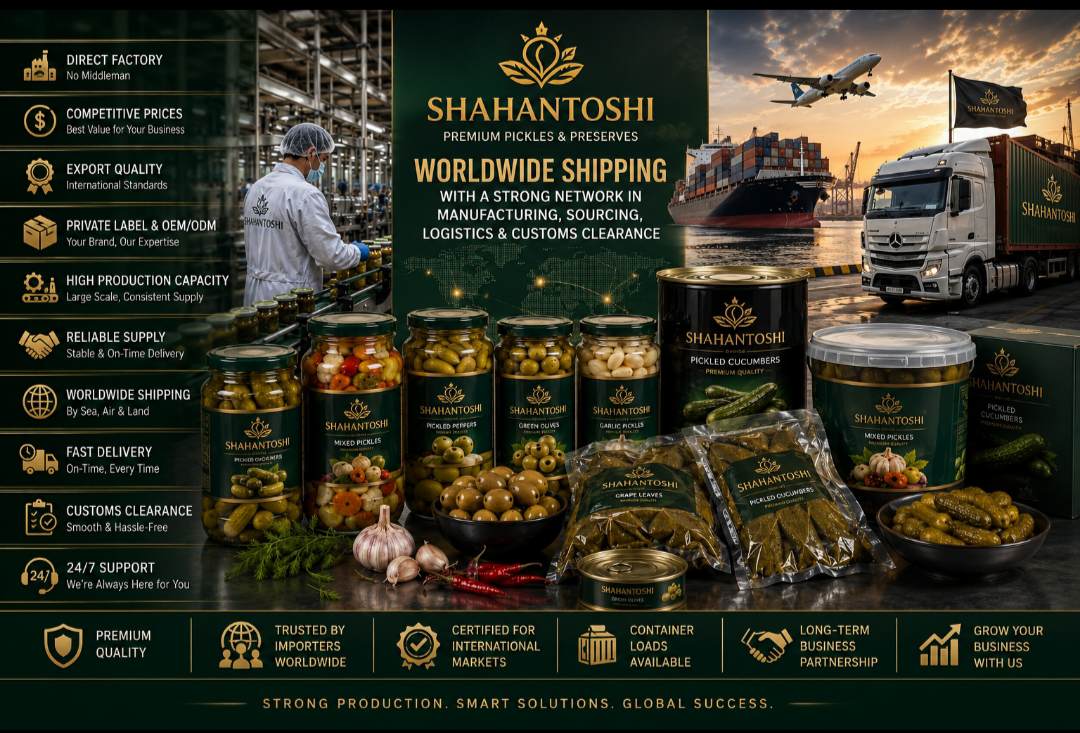
Persian pickles can be supplied in different formats depending on the target market and commercial application.
Common options may include:
- Glass jars
- PET containers
- Plastic buckets
- Metal cans
- Bulk packaging
- Customized retail packaging
- Private Label packaging
For example, a supermarket buyer may require retail-ready glass jars with customized labeling, while a food service distributor may prefer larger PET containers or bulk formats.
The best packaging solution depends on the buyer’s market, storage system, distribution model, product specification, and transportation requirements.
Container Loading and Space Efficiency
For international food buyers, container utilization can have a major impact on the final landed cost of a product.
The number of units loaded into a shipment depends on:
- Packaging size
- Product weight
- Container type
- Pallet configuration
- Carton dimensions
- Stacking limitations
- Product protection requirements
For this reason, buyers should evaluate packaging and logistics together.
A cheaper unit price does not necessarily mean a lower landed cost if the packaging occupies significantly more transportation space.
Professional export planning considers the complete supply chain rather than looking only at the factory price.
From Factory Price to Landed Cost
Importers should distinguish between the supplier’s product price and the final landed cost.
The total cost may include:
Product Price + Packaging + Inland Transportation + Export Handling + Freight + Insurance + Customs/Duties + Destination Charges + Local Delivery
The exact components depend on the agreed Incoterm, destination, product classification, transportation method, and applicable regulations.
For this reason, an experienced buyer should request a quotation based on clearly defined commercial terms rather than comparing factory prices alone.
Why Preserved Foods Can Offer Logistics Flexibility
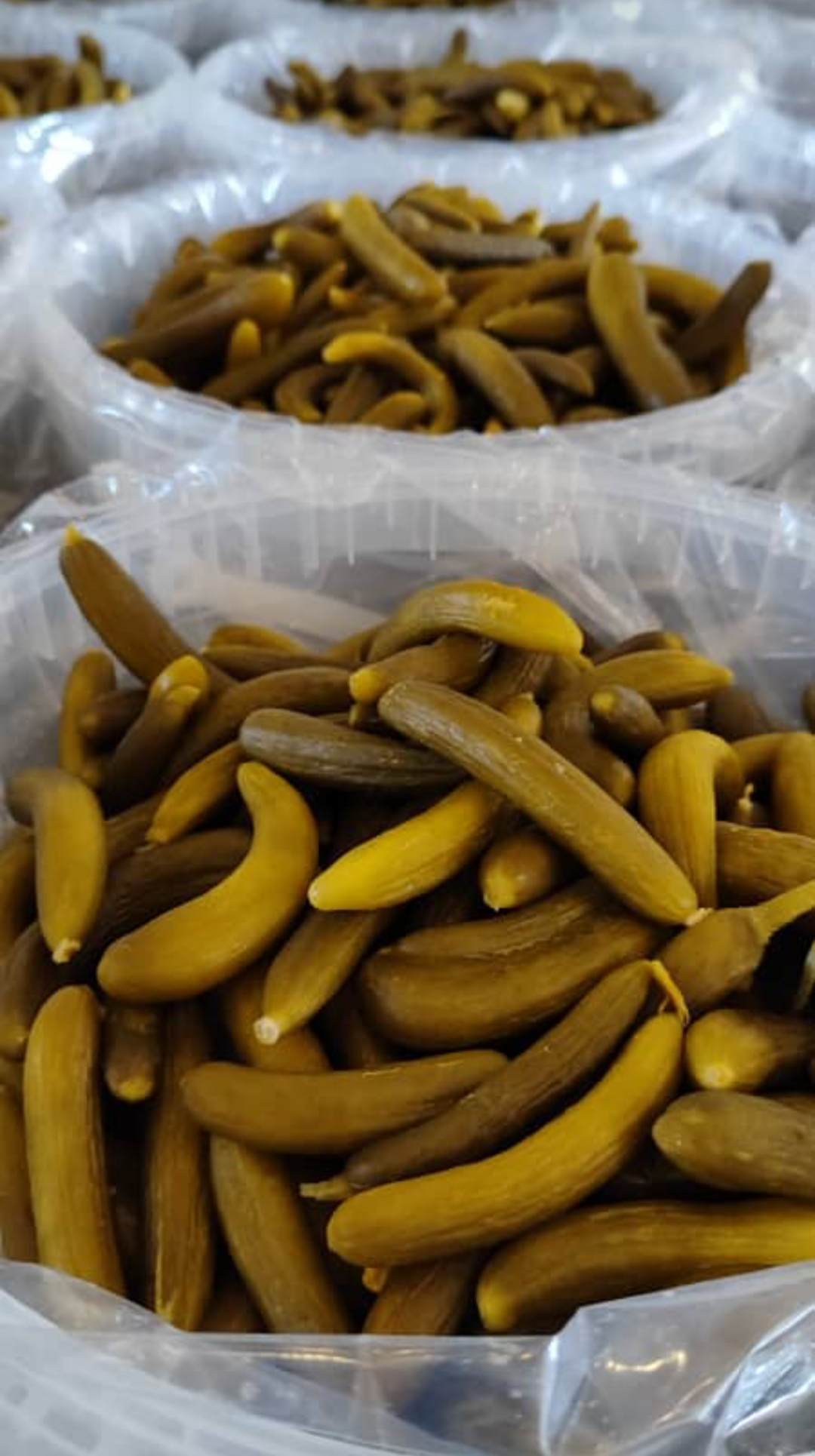
One advantage of products such as pickles and preserved vegetables is their suitability for longer-distance distribution when they are correctly manufactured, sealed, labeled, stored, and transported according to their specifications.
This can make them attractive for international wholesalers and distributors who need to maintain inventory rather than depend on immediate consumption after arrival.
Products such as:
- Iranian Cucumber Pickles
- Persian Mixed Pickles
- Pickled Garlic
- Pickled Jalapeños
- Iranian Olives
- Olive Slices
- Preserved Vegetables
can therefore be considered for a variety of international distribution models.
Shelf life, storage conditions, packaging integrity, and destination-market requirements should always be verified for the specific product before shipment.
Logistics for Private Label Pickles
Private Label buyers have additional logistics requirements.
A Private Label order may involve:
- Customized label design
- Buyer-specific packaging
- Different carton configurations
- Barcode requirements
- Destination-market labeling
- Product specifications
- Minimum order quantities
- Production scheduling
- Approval samples
Because these orders require additional coordination, logistics planning should begin at the quotation and product-development stage rather than after production.
This helps avoid unnecessary delays and ensures that the product, packaging, documentation, and transportation plan are aligned.
What International Buyers Should Ask an Iranian Food Exporter
Before placing an order, importers should ask clear questions.
Product
- What is the exact product specification?
- What packaging options are available?
- What is the shelf life?
- What are the storage requirements?
- What is the net and gross weight?
Production
- What is the minimum order quantity?
- What is the production capacity?
- What is the production lead time?
- Can the product be manufactured under a Private Label?
Logistics
- Which shipping methods are available?
- Which ports or border routes can be considered?
- What is the estimated transit time?
- Which Incoterm is being offered?
- Can the supplier coordinate freight?
Documentation
- Which export documents are provided?
- What certificates are available?
- Can the labeling meet destination-market requirements?
Commercial Terms
- What is the quotation validity?
- What are the payment terms?
- What is included in the quoted price?
- How are changes in freight or logistics costs handled?
These questions help both sides understand the transaction before production begins.
A Better Way to Think About Importing Food from Iran
The question should not simply be:
“Can food products be exported from Iran?”
The more useful question is:
“Which product, route, transportation method, commercial term, and supplier structure are most appropriate for this specific order?”
That is the foundation of professional international sourcing.
A serious exporter does not eliminate every external risk.
Instead, the exporter works with the buyer to understand the order, evaluate available options, prepare the shipment correctly, and respond professionally when circumstances change.
Iranian Pickles: From Production to Your Market
For international buyers looking for Persian pickles, the journey begins with agricultural raw materials and continues through manufacturing, quality control, packaging, export preparation, transportation, customs procedures, and final delivery.
The success of the shipment depends on coordination across every stage.
That is why choosing an experienced Iranian food supplier is just as important as choosing the product itself.
At Shahantorshi, our focus is on supplying Iranian pickles, preserved vegetables, olives, and related food products for international buyers, wholesalers, distributors, food service companies, and Private Label customers.
Our approach is based on understanding the buyer’s requirements first and then developing the appropriate product, packaging, production, and export solution for the destination market.
Start with the Product. Plan the Route. Build the Partnership.
Whether you are looking for wholesale cucumber pickles, Persian mixed pickles, pickled garlic, jalapeños, olives, preserved vegetables, or Private Label production, the right logistics plan should be part of the sourcing process from the beginning.
International food trade becomes more manageable when product specifications, packaging, documentation, transportation, and commercial terms are planned together.
For importers considering Iranian food products, this integrated approach can provide a clearer path from the factory to the final market.