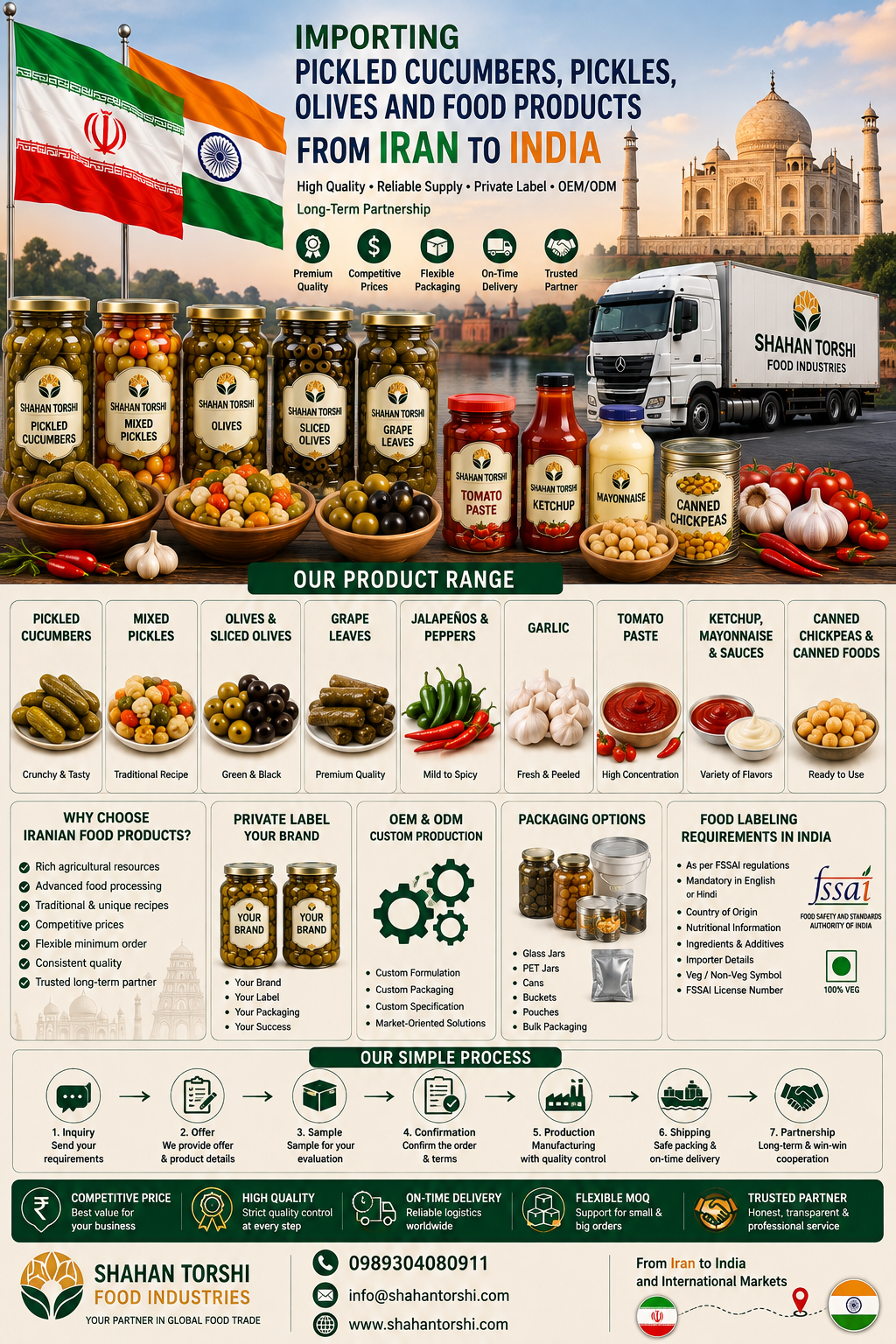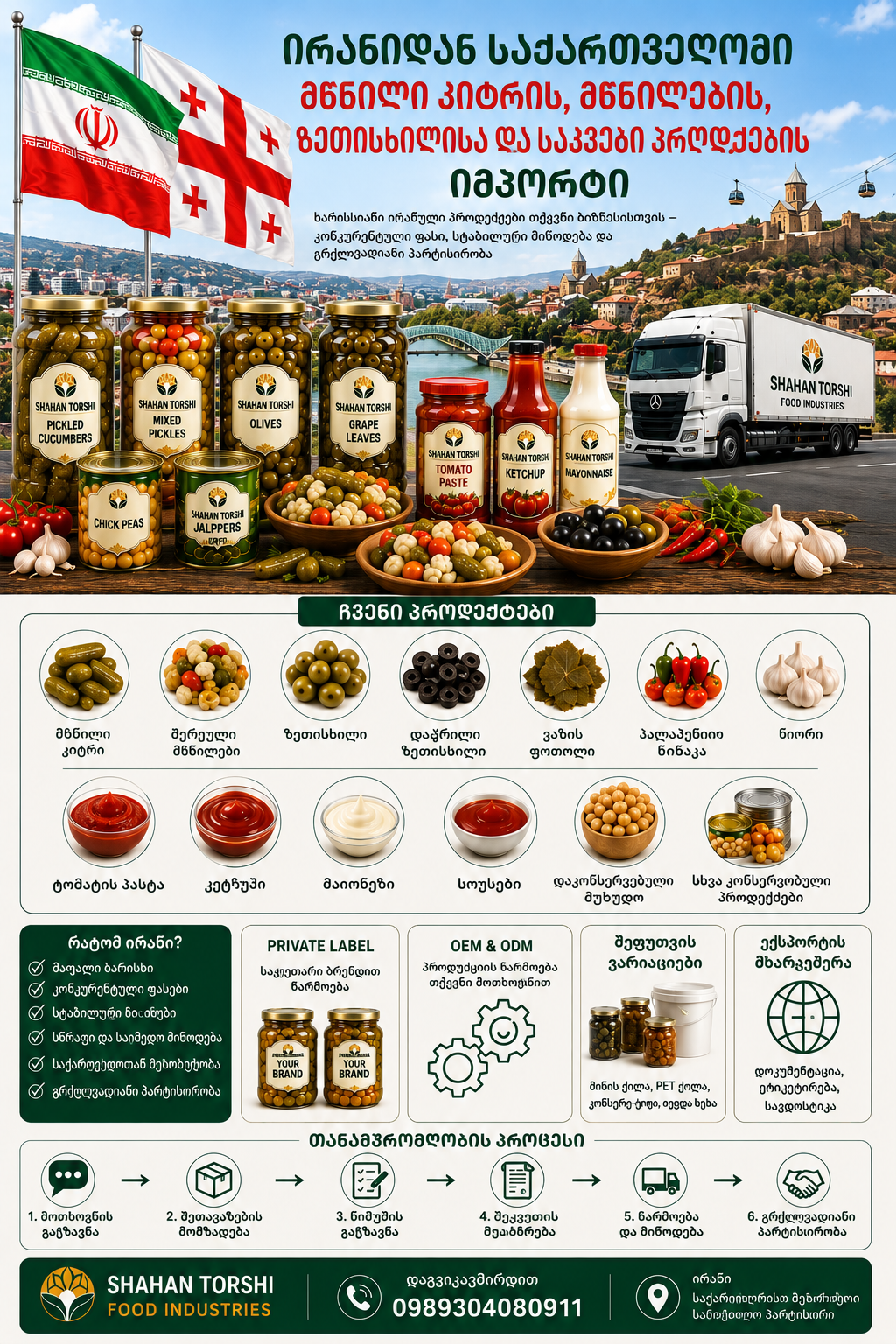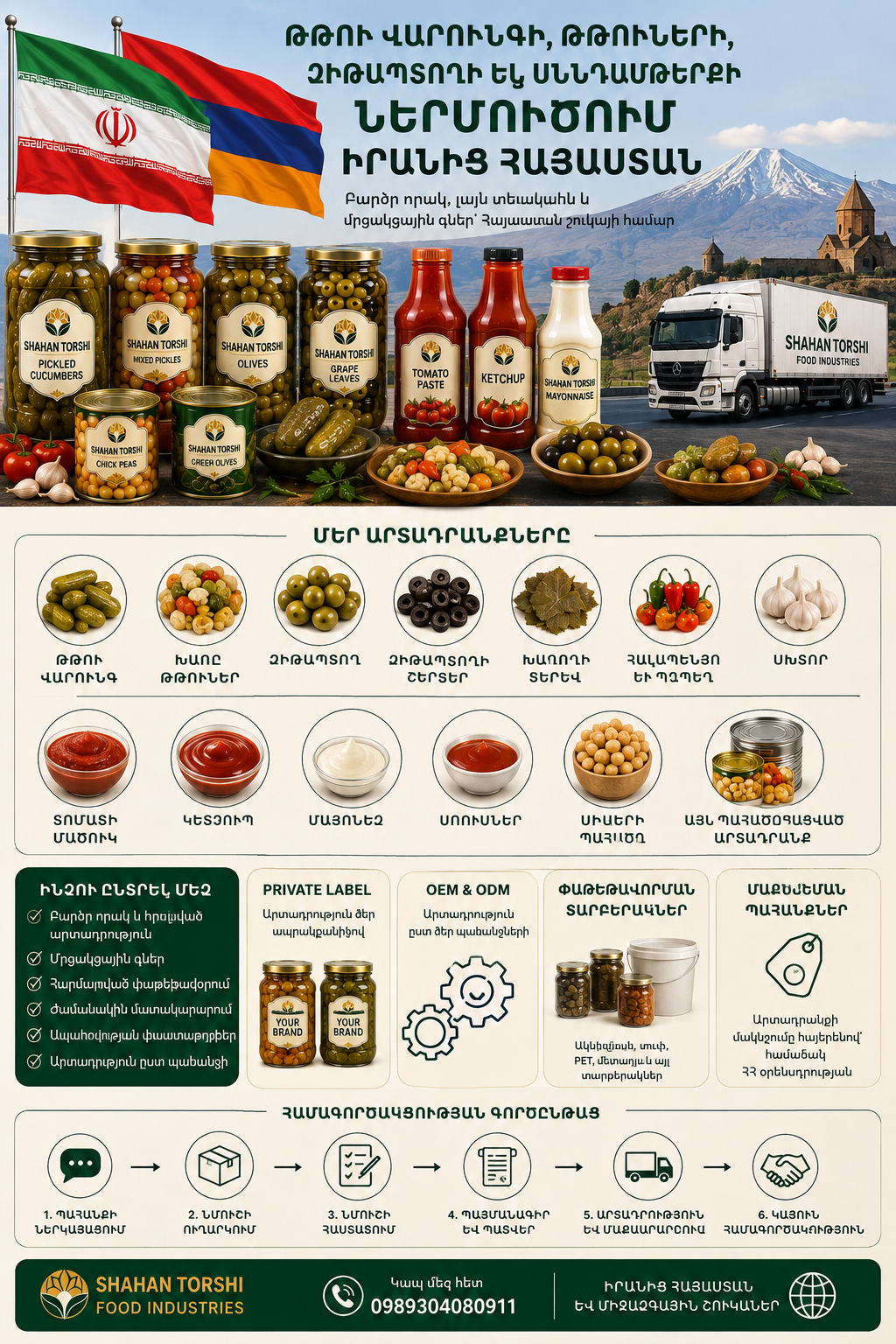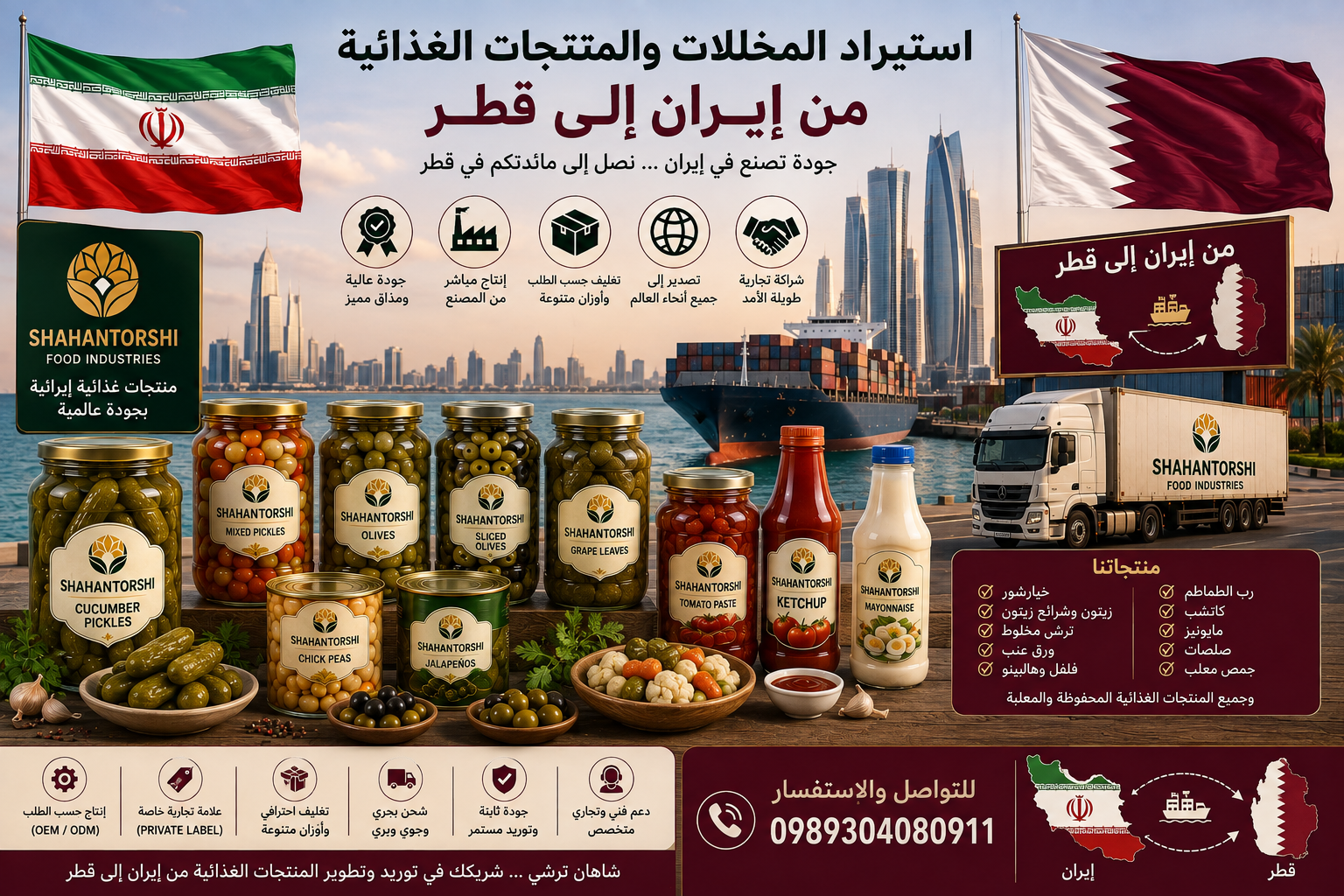
Importing Pickled Cucumbers, Pickles, Olives and Preserved Food Products from Iran to India
India is one of the world’s largest food markets, with a highly developed domestic food-processing industry and strong demand across retail, food service, wholesale and industrial channels. For importers and distributors, however, entering the Indian market requires more than simply finding a low-cost supplier. Product specifications, packaging, labeling, documentation, food-safety compliance, logistics and continuity of supply all need to be considered before a commercial order is placed.
Iran can offer opportunities for Indian buyers looking for specific preserved food products, customized recipes, private-label production and regional supply partnerships. The most suitable opportunity depends on the product category, target market, price level, packaging format and the importer’s distribution network.
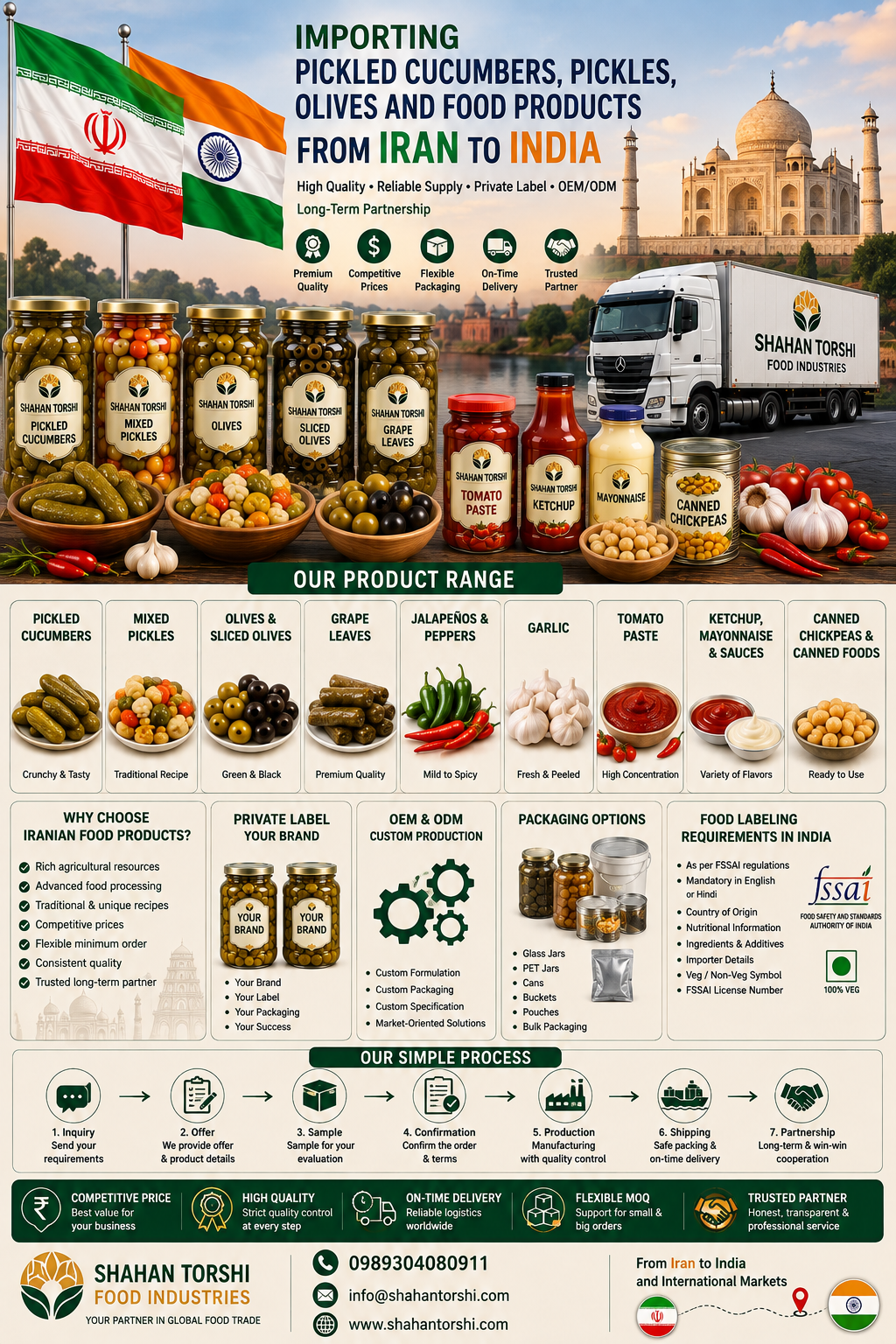
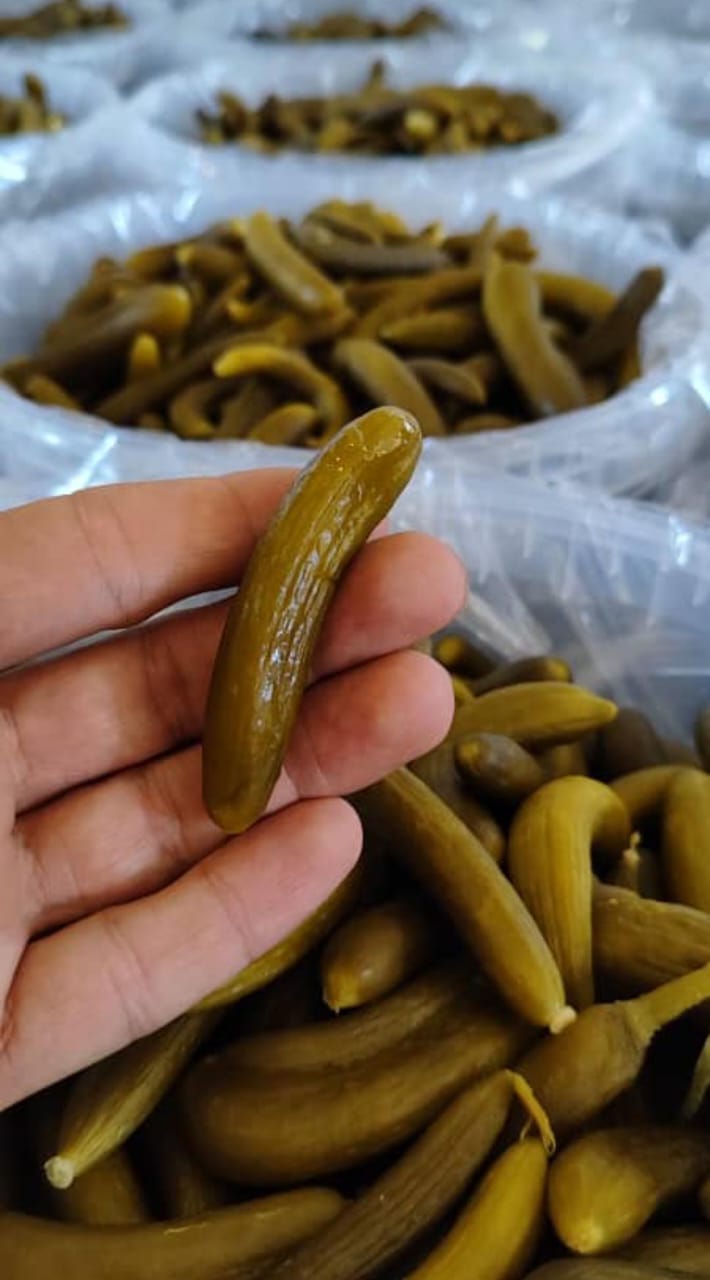
Importing Pickled Cucumbers and Gherkins from Iran to India
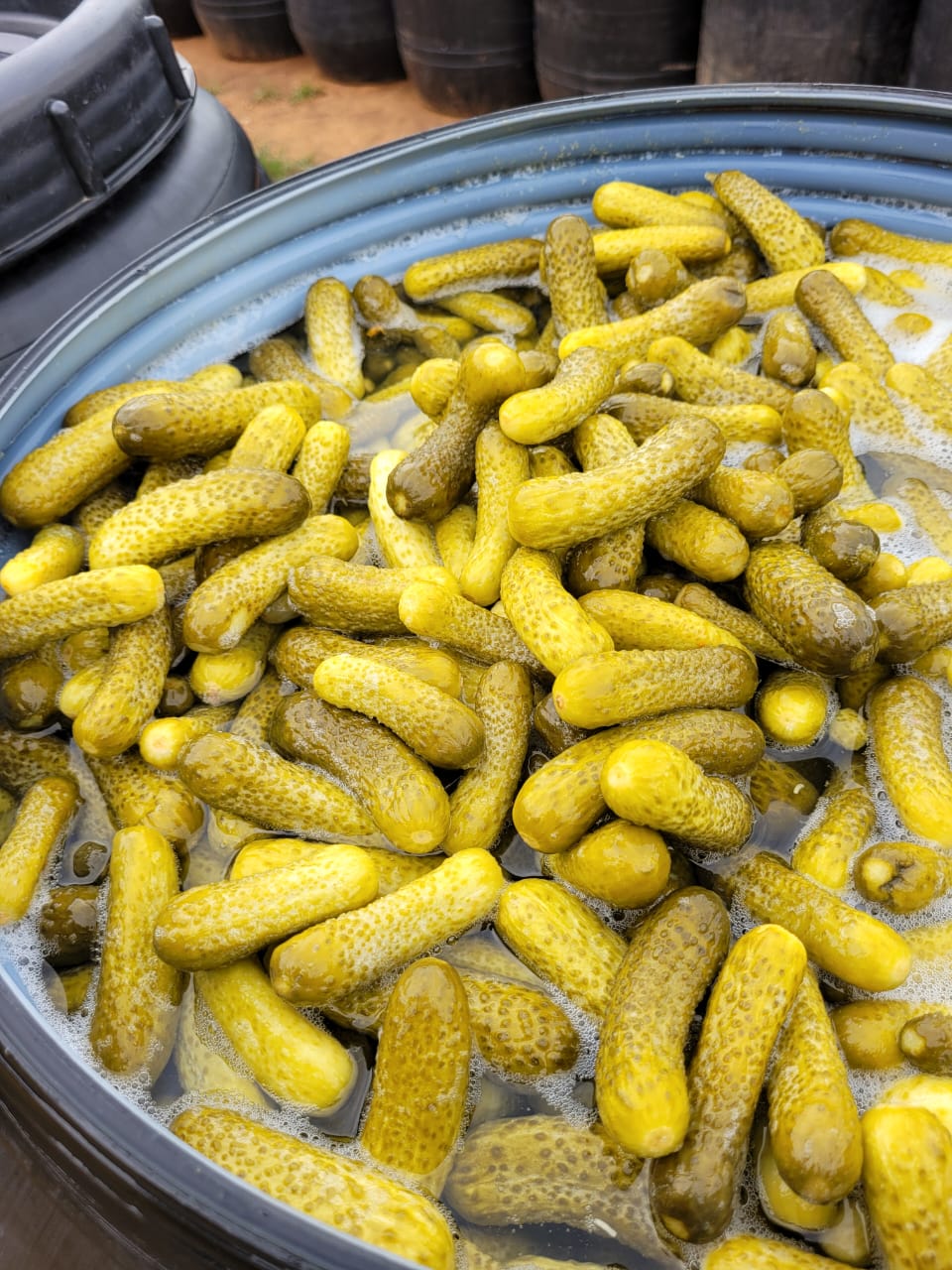
Pickled cucumbers and gherkins are established products in international food trade and are used through retail, restaurants, food service and food manufacturing channels.
According to World Bank WITS data based on UN Comtrade, India exported approximately US$186 million of vinegar-preserved cucumbers and gherkins under HS 200110 in 2024. This demonstrates the scale and competitiveness of India’s own pickled-cucumber industry.
For an Iranian supplier, this also means that the Indian market should not be approached simply as a volume market. Imported products need a clear commercial reason to enter the supply chain, such as a distinctive recipe, specific packaging, competitive landed cost, private-label production, specialized food-service formats or a supply arrangement designed for a particular customer segment.
Iranian suppliers can develop cucumber pickles according to the buyer’s required specifications, including cucumber size, acidity, salt level, seasoning, packaging, net weight and labeling requirements.
Pickles and Mixed Pickled Vegetables
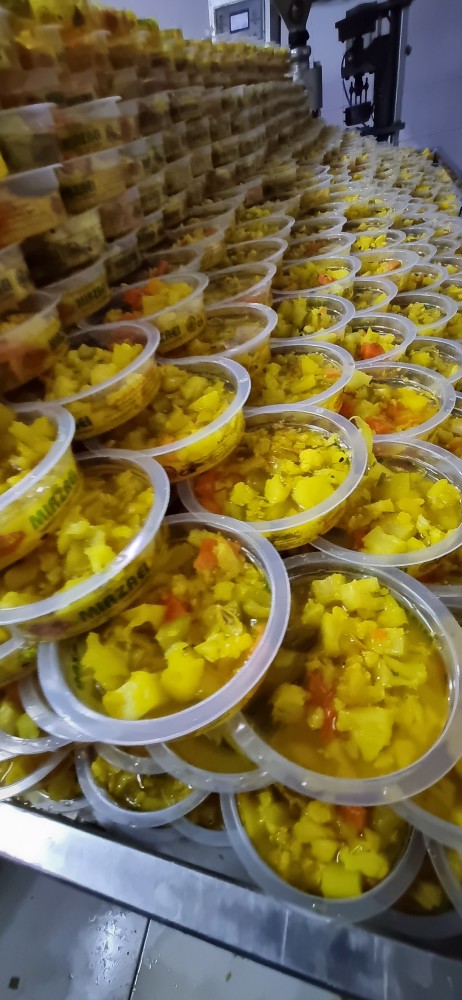
Iran has a long tradition of producing different types of pickled vegetables. Mixed pickles can combine vegetables such as cucumber, carrot, cauliflower, cabbage, garlic, peppers and other ingredients according to the recipe and target market.
For Indian importers, mixed pickles can be developed for different commercial channels, including:
- Retail supermarkets
- Wholesale distribution
- Restaurants and hotels
- Food-service companies
- Catering businesses
- Food manufacturers
- Private-label brands
The recipe does not have to remain fixed. An export supplier can work with the importer to develop a product based on the desired taste profile, ingredient composition, acidity, salt level, texture and packaging format.
Olives and Sliced Olives
Olives are another important category for international food distribution.
Iranian suppliers can provide whole green olives and sliced olives in different packaging formats for retail, restaurants, food service and food manufacturing.
Sliced olives can be particularly useful for pizza producers, restaurants, sandwich manufacturers, catering companies and other food businesses that require ready-to-use ingredients.
For larger buyers, bulk packaging can also be considered instead of consumer-sized jars. The appropriate format depends on the buyer’s distribution model and intended application.
Grape Leaves, Jalapeños, Peppers and Garlic
Beyond cucumber pickles and mixed pickles, Iranian preserved-food suppliers can develop additional products for importers looking to build a broader portfolio.
Potential products include:
- Preserved grape leaves
- Jalapeño peppers
- Pickled peppers
- Pickled garlic
- Preserved vegetables
- Mixed vegetable products
- Other customized pickled products
These products can be supplied individually or as part of a broader food portfolio, allowing an importer to consolidate several product categories through one supplier where specifications and commercial terms are suitable.

Tomato Paste from Iran
Tomato paste is another major category in the Iranian food industry.
For importers and food manufacturers, tomato paste can be supplied in packaging formats suitable for retail, food service or industrial use. The required specifications should be agreed before quotation, including product concentration, packaging, net weight, quality parameters, shelf-life requirements and destination-market documentation.
For industrial buyers, the correct specification is particularly important because tomato paste may be used as an ingredient in sauces, prepared foods and other processed products.
Ketchup, Mayonnaise and Sauces
Iranian food manufacturers can also supply products such as ketchup, mayonnaise and other sauces.
For international buyers, these products can be developed according to the intended market and customer segment. Packaging, recipe, labeling language, serving size and product positioning can be discussed before production.
This creates an opportunity for importers that are looking for products under their own brand rather than purchasing only an existing supplier brand.
Canned Chickpeas and Other Canned Foods
Canned chickpeas and other preserved foods can also be considered for international distribution.
For wholesalers, supermarkets and food-service companies, canned products can provide convenient storage, transportation and distribution. The final product specification should be established according to the destination market and the buyer’s requirements.
A professional export process begins with a clear product specification rather than an immediate price quotation.
Why Indian Importers May Consider Iranian Food Suppliers
The decision to import food products from Iran should be based on the total commercial proposition rather than product price alone.
Important factors include:
- Product quality and consistency
- Factory production capacity
- Packaging options
- Ability to customize products
- Export documentation
- Order volume
- Logistics and transportation
- Delivery schedule
- Product shelf life
- Continuity of supply
- Communication and commercial support
- Long-term cooperation
Iran’s geographic position can also be relevant when evaluating regional supply routes, although the final logistics and landed cost must be calculated for each shipment and destination.
Private Label Food Production for the Indian Market
Private Label production allows an importer or distributor to market food products under its own brand.
Instead of purchasing a supplier’s standard retail brand, the buyer can discuss requirements such as:
- Brand name
- Product recipe
- Packaging design
- Jar or container size
- Net weight
- Label information
- Product positioning
- Carton configuration
- Export packaging
Private Label production can be useful for Indian distributors and food companies that already have an established brand or retail network.
OEM and Customized Food Production
Customized production goes beyond simply changing the label.
Depending on the product and manufacturing capability, an international buyer may request modifications to the recipe, ingredients, packaging format, weight, serving size or other specifications.
A serious commercial process should begin by defining the buyer’s technical and commercial requirements. The supplier can then determine whether the requested product can be produced, provide the appropriate specification and prepare a quotation or sample accordingly.
Food Packaging for Export to India
Packaging should be selected according to the product, transportation conditions, storage requirements and sales channel.
Possible formats can include:
- Glass jars
- PET containers
- Metal cans
- Buckets
- Vacuum packaging
- Bulk packaging
- Food-service packaging
For retail products, packaging should also support the importer’s branding and labeling requirements.
For wholesale and food-service products, larger formats may be more commercially appropriate.
Food Labeling and Import Requirements in India
Imported food products entering India must comply with applicable food-safety and labeling requirements.
The Food Safety and Standards Authority of India (FSSAI) regulates food safety and food labeling. FSSAI materials specify requirements for imported packaged foods, including information relating to the importer, country of origin and FSSAI licensing. Food information may need to be provided in English or Hindi using Devanagari script, according to applicable requirements.
Importers also need to comply with the applicable import and food-clearance procedures. Depending on the product, documentation can include commercial invoices, packing lists, certificates of origin, certificates of analysis and other documents required by the relevant authorities.
Because Indian food regulations can be amended, the exact labeling and documentation requirements should be verified for the specific product before shipment.
Samples Before Commercial Orders
For an international food transaction, samples can be an important part of the purchasing process.
An Indian importer may need to evaluate:
- Taste
- Texture
- Appearance
- Product consistency
- Packaging
- Label information
- Net weight
- Shelf life
- Commercial suitability
After the sample and technical specifications are approved, the parties can proceed toward commercial terms and production.
Wholesale Food Supply for India
Indian wholesalers and distributors can require different packaging and commercial structures from retail buyers.
A wholesale order may involve larger quantities, bulk packaging, mixed product combinations or regular deliveries.
For this reason, the supplier should receive a clear request covering the product, quantity, packaging, destination, required delivery schedule and any specific technical requirements before preparing the final commercial offer.
Continuous Supply and Long-Term Cooperation
For a distributor, finding a supplier is only the beginning.
A sustainable food-import relationship depends on the supplier’s ability to maintain consistent specifications and supply capacity over time.
A long-term cooperation model can include:
- Initial samples
- Product approval
- Trial order
- Commercial shipment
- Quality monitoring
- Repeat orders
- Packaging development
- Private Label production
- Expansion of the product portfolio
This approach can create a more stable relationship between the importer and supplier than a one-time transaction.
Adapting Iranian Food Products to the Indian Market
India is a diverse market, and food preferences can vary considerably between regions and consumer groups.
Therefore, an export product should not automatically be treated as a finished product simply because it sells successfully in another country.
Before commercial production, the buyer and supplier can discuss the intended customer group, taste preferences, packaging size, price segment, distribution channel and regulatory requirements.
The final product should be developed around the actual commercial requirements of the Indian buyer.
Logistics and Export Planning
Food exports require careful planning from production to final delivery.
The process can involve:
- Product specification
- Sample preparation
- Buyer approval
- Commercial quotation
- Packaging and labeling approval
- Production
- Quality control
- Export documentation
- Loading
- International transportation
- Customs procedures
- Delivery to the buyer
Transportation options and routes should be evaluated according to the product, shipment size, destination, required delivery time and current commercial conditions.
Risk Management in International Food Trade
International trade always involves commercial, logistical and regulatory considerations.
For this reason, buyers and suppliers should establish clear terms before production begins.
Important points include:
- Product specifications
- Packaging specifications
- Quantity
- Price and payment terms
- Delivery terms
- Documentation
- Inspection requirements
- Production schedule
- Shipping arrangements
- Responsibilities of each party
Clear documentation and communication can reduce misunderstandings and help both sides manage the transaction more professionally.
Shahan Torshi as an Iranian Food Supply Partner
Shahan Torshi works with Iranian food production and supply capabilities to develop products for international buyers.
The product portfolio can include cucumber pickles, mixed pickles, olives, sliced olives, grape leaves, jalapeños, garlic, tomato paste, ketchup, mayonnaise, sauces and selected canned food products.
For international buyers, the focus is not only on supplying an individual product. The objective is to build a practical supply relationship based on product specifications, packaging requirements, export documentation, production capacity and continuity of supply.
Private Label and customized production can also be discussed for buyers that want to develop products under their own brand.
How to Start Importing Food Products from Iran to India
A practical process can begin with a detailed buyer inquiry.
The importer should provide:
- Product name
- Required quantity
- Packaging format
- Net weight
- Target market
- Delivery destination
- Preferred quality specifications
- Private Label requirements, if applicable
- Required delivery schedule
Based on this information, the supplier can evaluate the request, provide product specifications, prepare samples when necessary and develop a commercial offer.
Building a Long-Term Food Trade Partnership
Successful international food trade is built through consistency, transparency and commercial performance.
For Indian importers, the right supplier is not necessarily the company offering the lowest initial price. The complete supply proposition should be evaluated, including product quality, specifications, packaging, documentation, production capacity, delivery capability and the ability to support repeat orders.
For Iranian suppliers, understanding the importer’s market and developing products around real customer requirements can create opportunities for long-term cooperation.
Indian importers, wholesalers, distributors, food-service companies and food businesses interested in sourcing pickles, cucumber pickles, olives, preserved vegetables, tomato paste, sauces, canned foods or customized Private Label products from Iran can begin with their required product specifications and order quantity.
A clear specification is the first step toward a professional quotation, sample approval and a potential long-term supply partnership.